Creativity is a Process
This project explores the power of collaboration and the creative process from early ideation to final refinement. Through mind mapping, sketch exploration, and iterative thinking, my partner and I examined how creativity develops through different guiding ideas, including “Exist First, Perfect Later” and “Revise Before You Finalize.” These principles highlight the importance of allowing ideas to begin imperfectly and strengthening them through revision.
After gathering our ideas through the mind-mapping process, we created a collaborative zine that visually represents creativity as an evolving journey. The project focuses on how experimentation, reflection, and revision shape the development of ideas over time. My partner and I each designed one side of the spread while working together to maintain a cohesive concept and overall theme.
Creative Exploration Through Mind Mapping
During the ideation phase of this project, I created a series of hand drawn mind maps to explore the complexity of the creative process. Beginning with the central idea that “Creativity is a process,” I expanded outward to examine the many stages and influences that shape how ideas develop.
As I continued building the map, I realized that creativity is not a single path but a network of interconnected ideas. Concepts such as curiosity, experimentation, inspiration, challenge, reflection, and refinement all play different roles in shaping creative work. By drawing and writing these ideas outward, I was able to see how each stage contributes to the growth of an idea from early curiosity and exploration to revision and final decision making.
The first map allowed me to explore these ideas through simple sketches and visual metaphors, while the second expanded the concept into a more detailed system of connections. Through this process, I discovered how creativity is built from many perspectives and experiences, and how each stage whether experimentation, questioning, or reflection helps transform initial ideas into stronger and more refined outcomes.
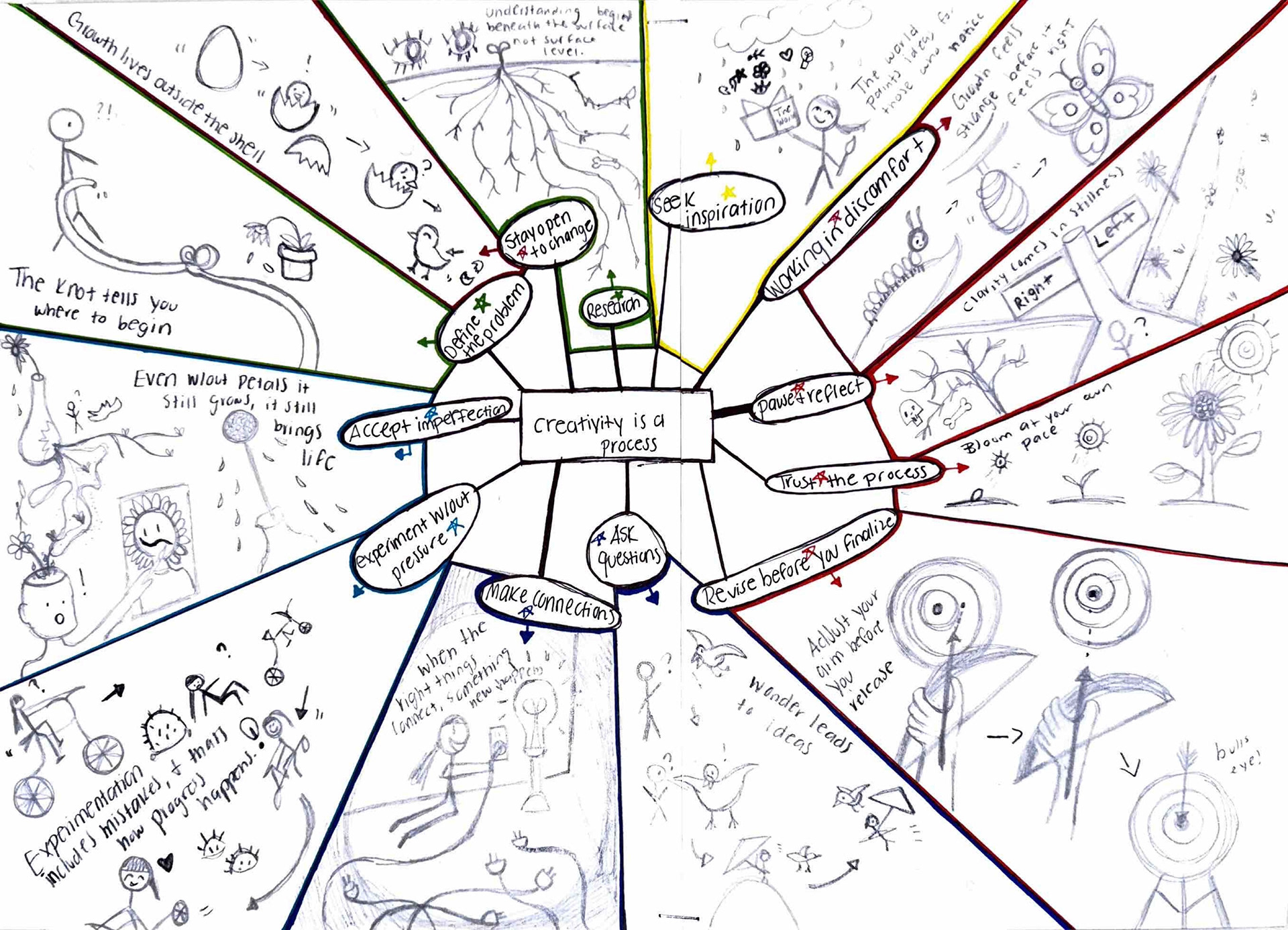
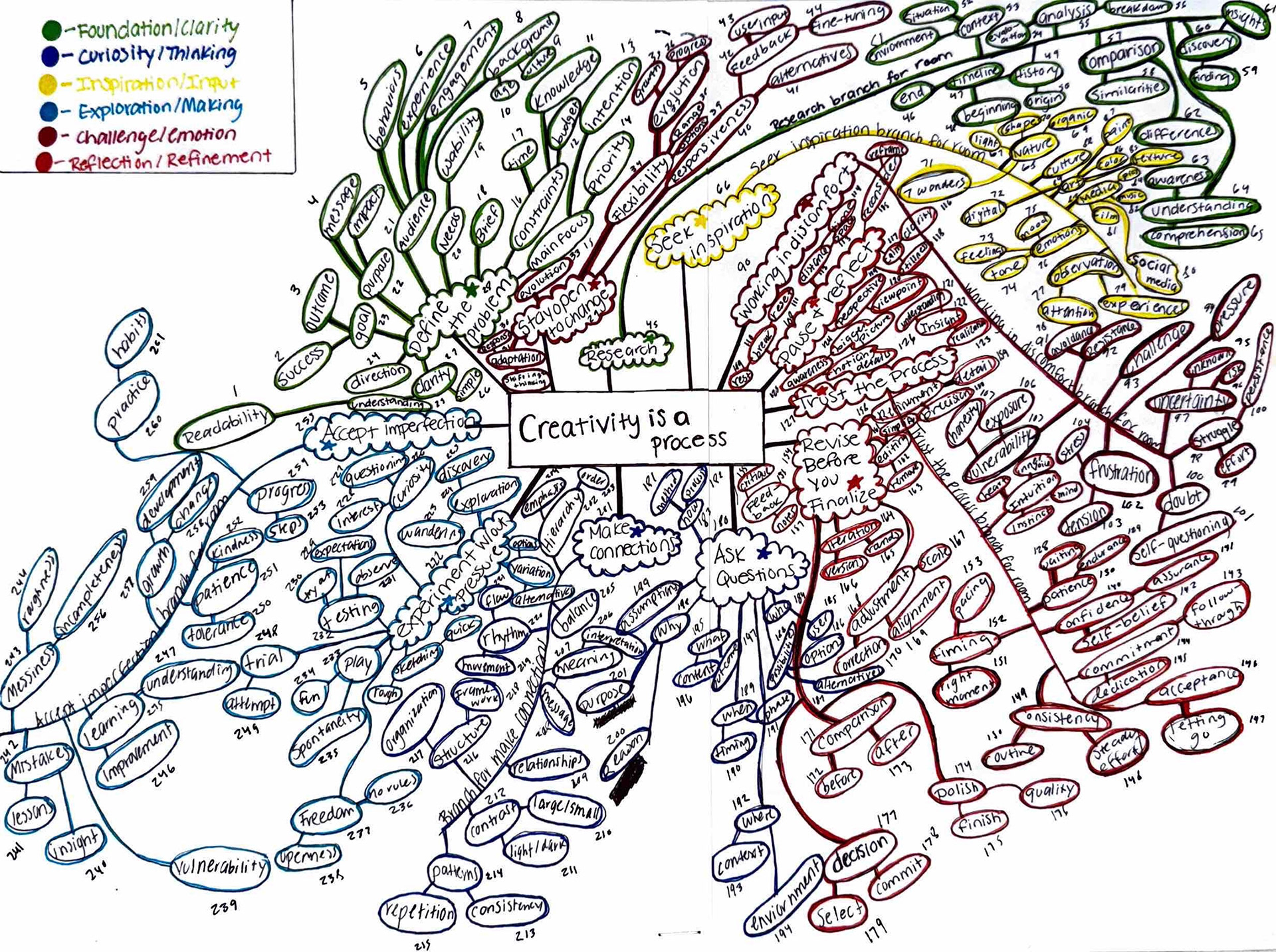
Hand-drawn mind maps exploring the different paths creativity can take during the ideation process. The left map focuses on visual sketches and metaphors, while the right map expands the concept through more detailed written connections.
Collaborated Mind Map
This collaborative mind map was developed with my partner to explore the many stages and influences that shape the creative process. Beginning with the central idea that creativity is an evolving system rather than a single step, we expanded outward to identify key principles such as experimentation, accepting imperfection, discipline, curiosity, reflection, and revision. By visually connecting these ideas, we were able to see how different creative mindsets and actions interact to support the development of ideas.
The process allowed us to organize our thoughts into a structured visual network that highlights how creativity grows through multiple perspectives and experiences. Working together helped broaden the range of ideas within the map, combining both conceptual thinking and practical design strategies. This collaborative exploration ultimately informed the direction and themes of our final zine project.
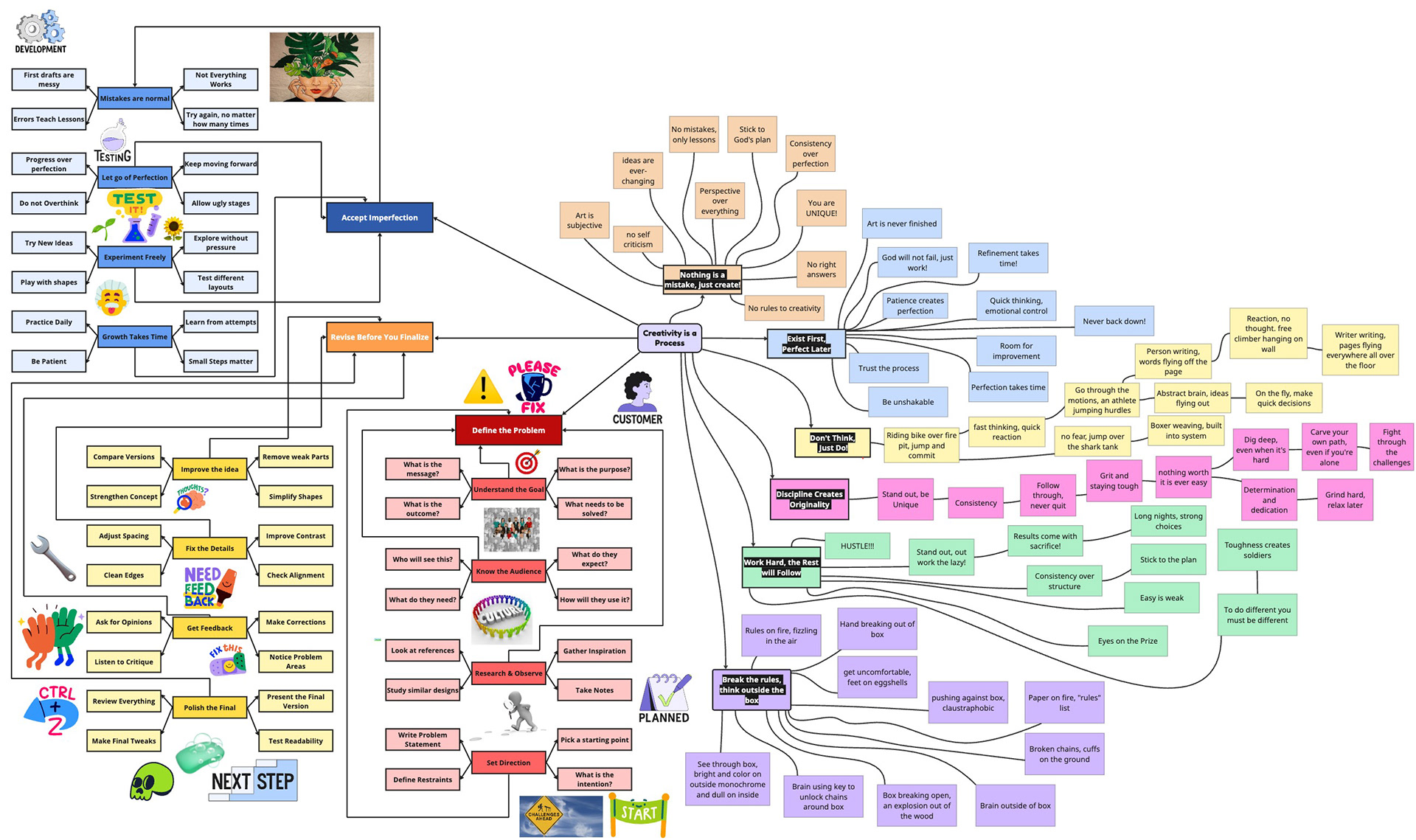
This mind map was created on Miro where we were both actively adding our ideas at the same time. My side of the mind map is the left and my partner's is the right.
Final Execution
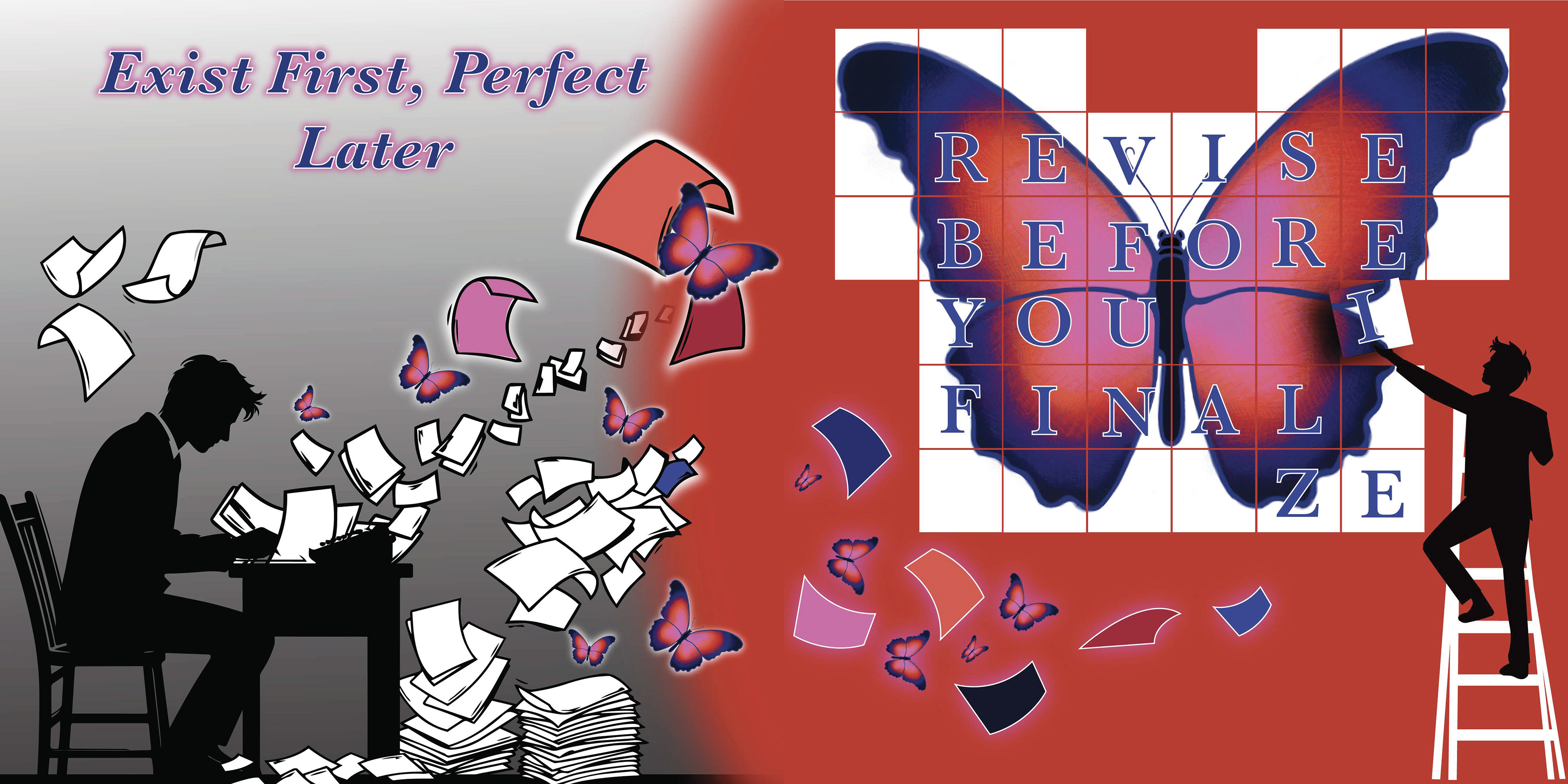
This collaborative zine spread was created with my partner, where we each designed one side of the composition while maintaining a shared concept and visual narrative. The left side of the spread was designed by my partner and represents the early stage of the creative process, inspired by the idea “Exist First, Perfect Later.” It illustrates the chaotic and exploratory phase of creativity, where ideas are still forming and experimentation plays an important role.
The right side of the spread was designed by me and focuses on the concept “Revise Before You Finalize.” While both of us used Adobe Illustrator to construct the layout of the zine, I also used Adobe Photoshop to digitally paint the butterfly that becomes the central visual element of my composition. In order to create the effect of the butterfly being assembled on the wall, I created a grid over the artwork and used the slice tool in Photoshop to divide the butterfly into individual sections. Each section was exported as a JPEG and placed back into Adobe Illustrator to form the tiled butterfly composition.
The color scheme reflects the evolution of the creative process. On the left side, the muted tones represent the early stage of ideation when ideas are still developing. As the composition moves to the right, the colors become brighter and more vibrant, symbolizing the growth and clarity that emerge as a concept becomes more refined. However, the figure on the ladder emphasizes that the process is still ongoing, reinforcing the idea that creativity does not end with completion but continues through revision and improvement.