Infographic Poster: Minimalism &
The Night-Blooming Flower
This project explores minimalism as a worldview centered on the belief that fulfillment comes from meaning rather than material excess. Instead of pursuing happiness through possessions, status, or constant consumption, minimalism encourages individuals to focus on relationships, creativity, gratitude, and inner peace.
The infographic visually represents this concept through the metaphor of the night-blooming cereus, a cactus that blooms quietly at night and relies on bats for pollination. This natural relationship symbolizes how growth can occur through balance and intentional living rather than competition or excess. Through research, symbolism, and structured visual communication, the design aims to illustrate how releasing unnecessary desire can create space for clarity, connection, and a more meaningful life.
Research and Inspiration
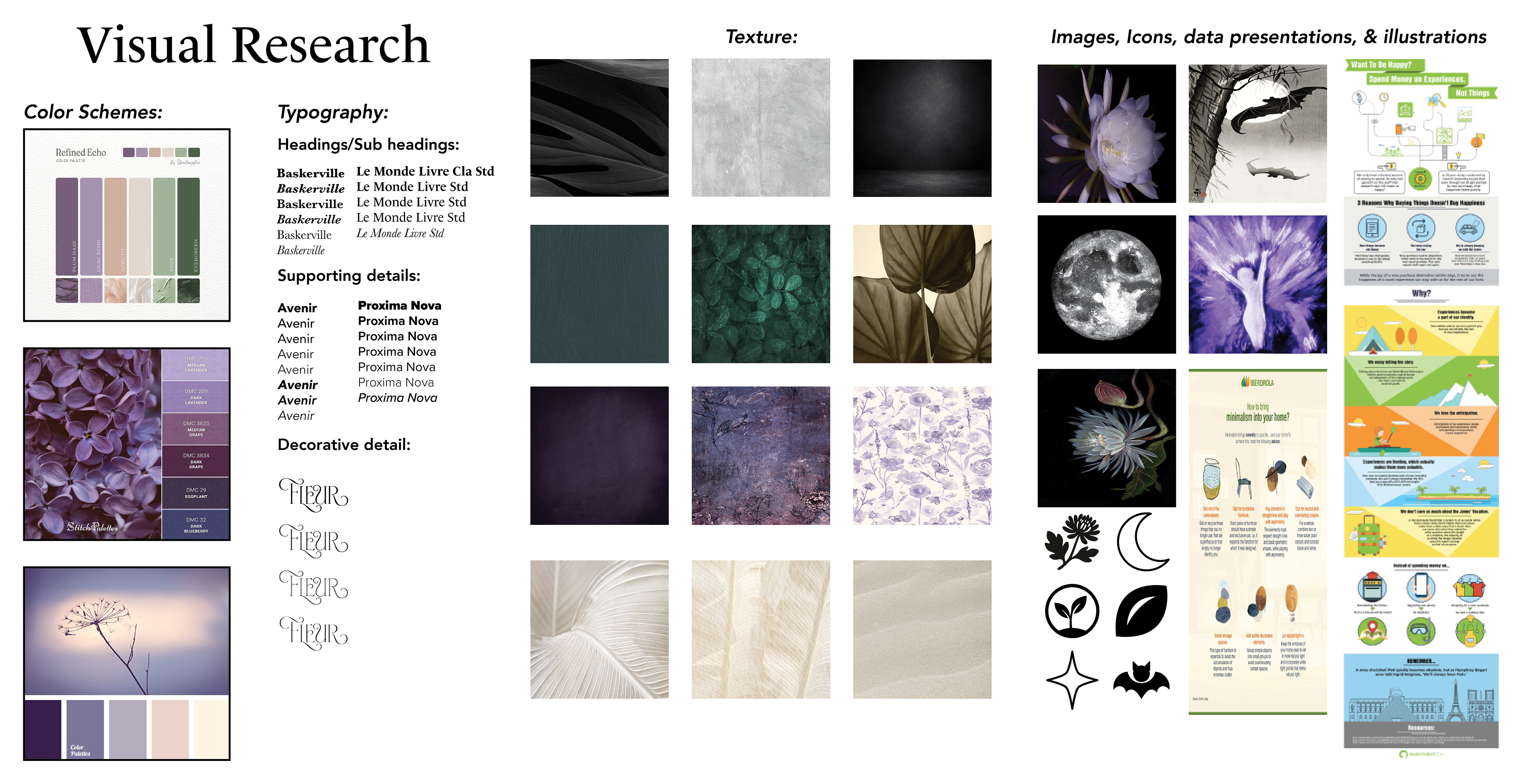
Research was conducted to establish the tone and direction of the infographic. Color palettes, textures, typography pairings, and symbolic imagery were gathered to support the themes of balance, calmness, and intentional living. These references helped inform the visual language of the project while also guiding decisions about hierarchy, iconography, and overall composition.
Early Sketches
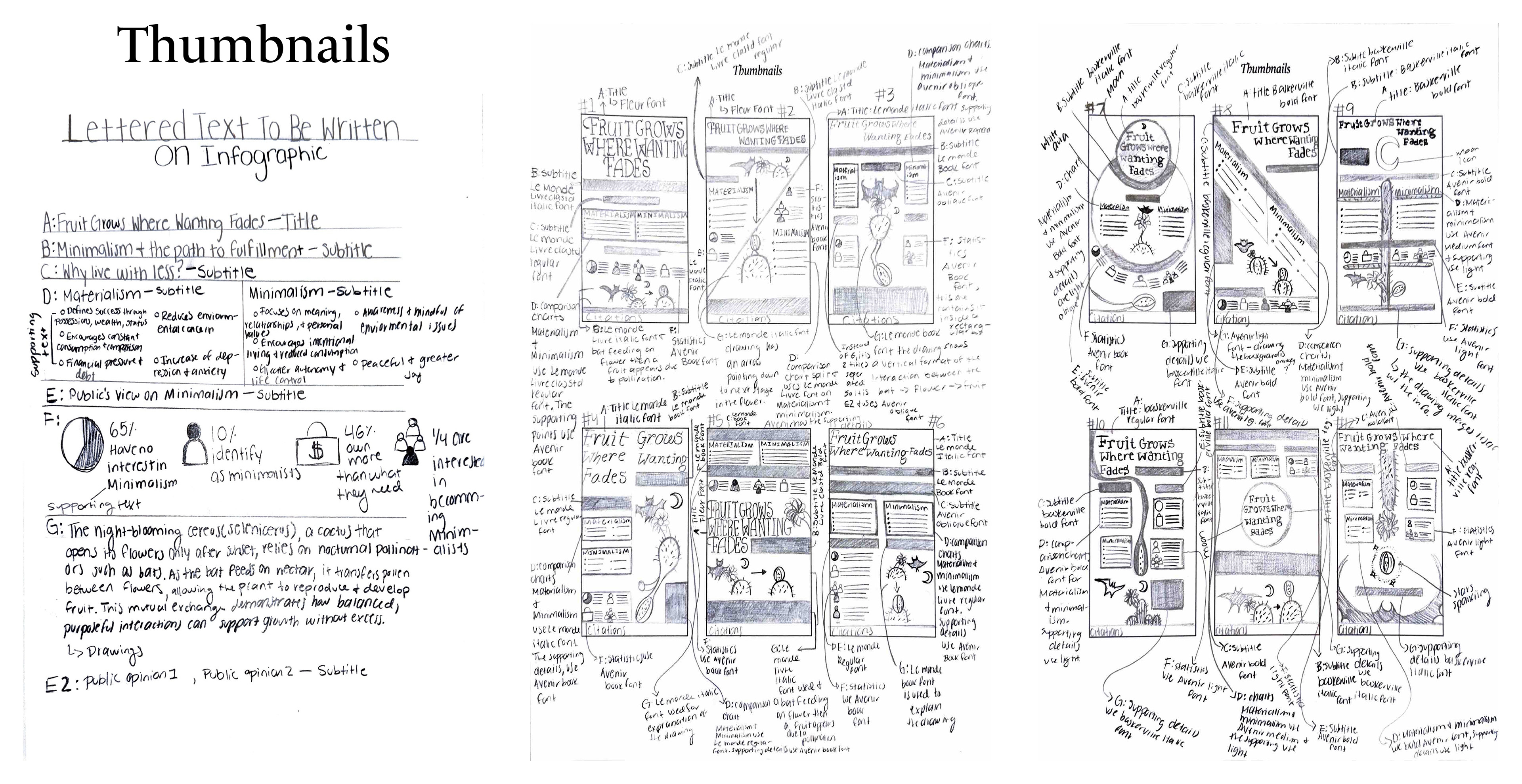
These thumbnail sketches were created to rapidly explore multiple layout directions for the infographic before developing a refined composition. Rather than writing all of the final text at this stage, lines and labeled sections were used to represent where headings, body text, data points, icons, and illustrations would eventually appear. This method allowed the focus to remain on information hierarchy, visual balance, and the overall flow of the design.
By quickly sketching several variations, I was able to test how the viewer’s eye would travel through the infographic and how the sections discussing materialism, minimalism, and public opinion could be organized clearly. This iterative process helped identify the strongest structure for communicating the concept while leaving flexibility for refinement in later stages of development.
Rough Concept Sketches
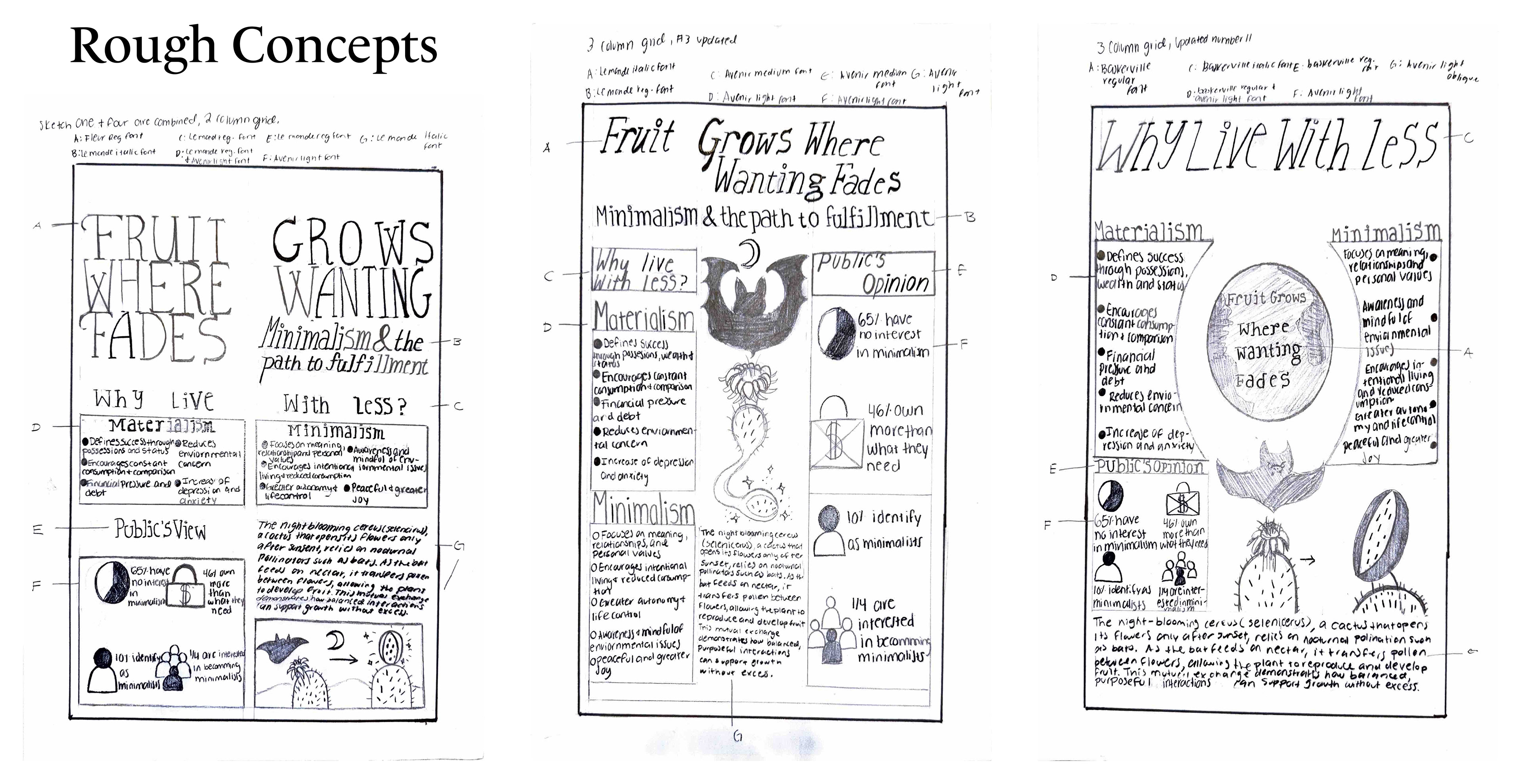
After reviewing the thumbnails, three of the strongest layout ideas were selected and developed further to better evaluate the structure of the infographic. At this stage, the sketches became more refined and the actual text was written directly into the compositions instead of using placeholder lines. Writing the headings, subtitles, and key information helped determine how much space the content would require and whether the hierarchy of information was clear.
The drawings and symbols were also developed with more detail to better visualize how the night-blooming cereus, bat imagery, and supporting icons would interact with the layout. This step made it easier to compare the three concepts and identify which composition most effectively communicated the relationship between materialism, minimalism, and the idea that fulfillment grows when excess fades.
Final Infographic
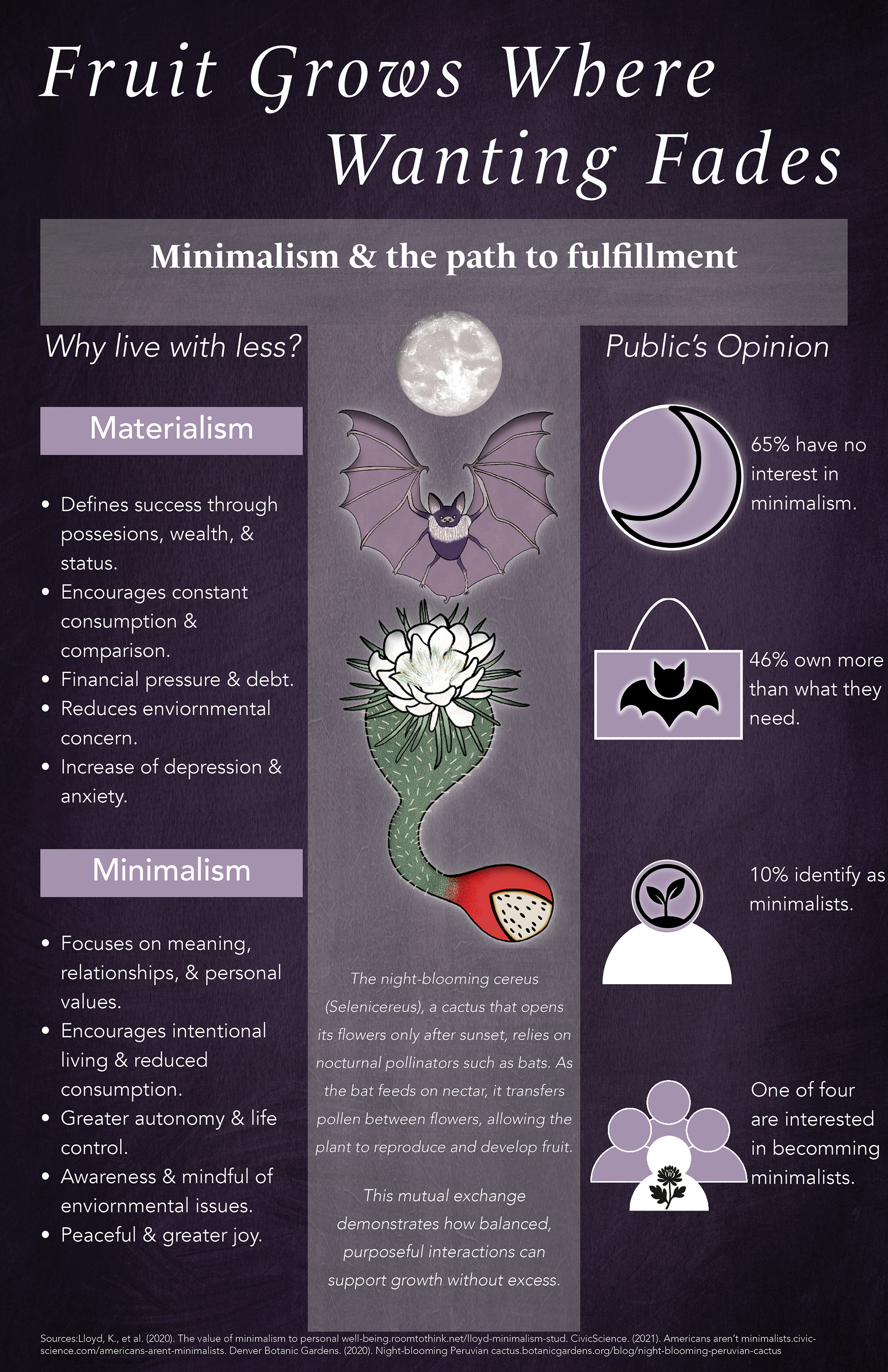
The final infographic combines research-based information with symbolic imagery to communicate the relationship between materialism, minimalism, and personal fulfillment. The composition centers around the metaphor of the night-blooming cereus and its interaction with bats, representing how growth and balance can occur when we release the constant pursuit of excess.
Several tools were used throughout the design process. The bat and the night-blooming cereus were digitally painted in Adobe Photoshop to give the illustration a softer, more organic look that fit the theme of quiet growth in nature. The supporting icons were created in Adobe Illustrator, allowing them to remain clean, scalable, and consistent with the infographic style. The black icons used in some sections were sourced images rather than custom illustrations.
Finally, the overall layout and typography were assembled in Adobe InDesign, where the grid, hierarchy, and spacing were refined to guide the viewer through the information clearly while maintaining visual balance across the entire infographic.