Beyond the Surface: Exploring structure through paper
This project explores how a single sheet of paper can transform from a flat surface into a three-dimensional structure through cutting, folding, and material experimentation. By studying the physical properties of paper, I investigated how simple interventions such as repeated cuts, geometric folds, and structural tension can create movement, depth, and function.
The project includes two primary outcomes: an abstract sculptural paper structure inspired by architectural forms and a functional pop-up gift card holder prototype created without adhesive and minimal paper waste. Both pieces demonstrate how thoughtful planning and material awareness can turn an ordinary sheet of paper into a dimensional design object.
Concept Sketches: The Paper Prototype
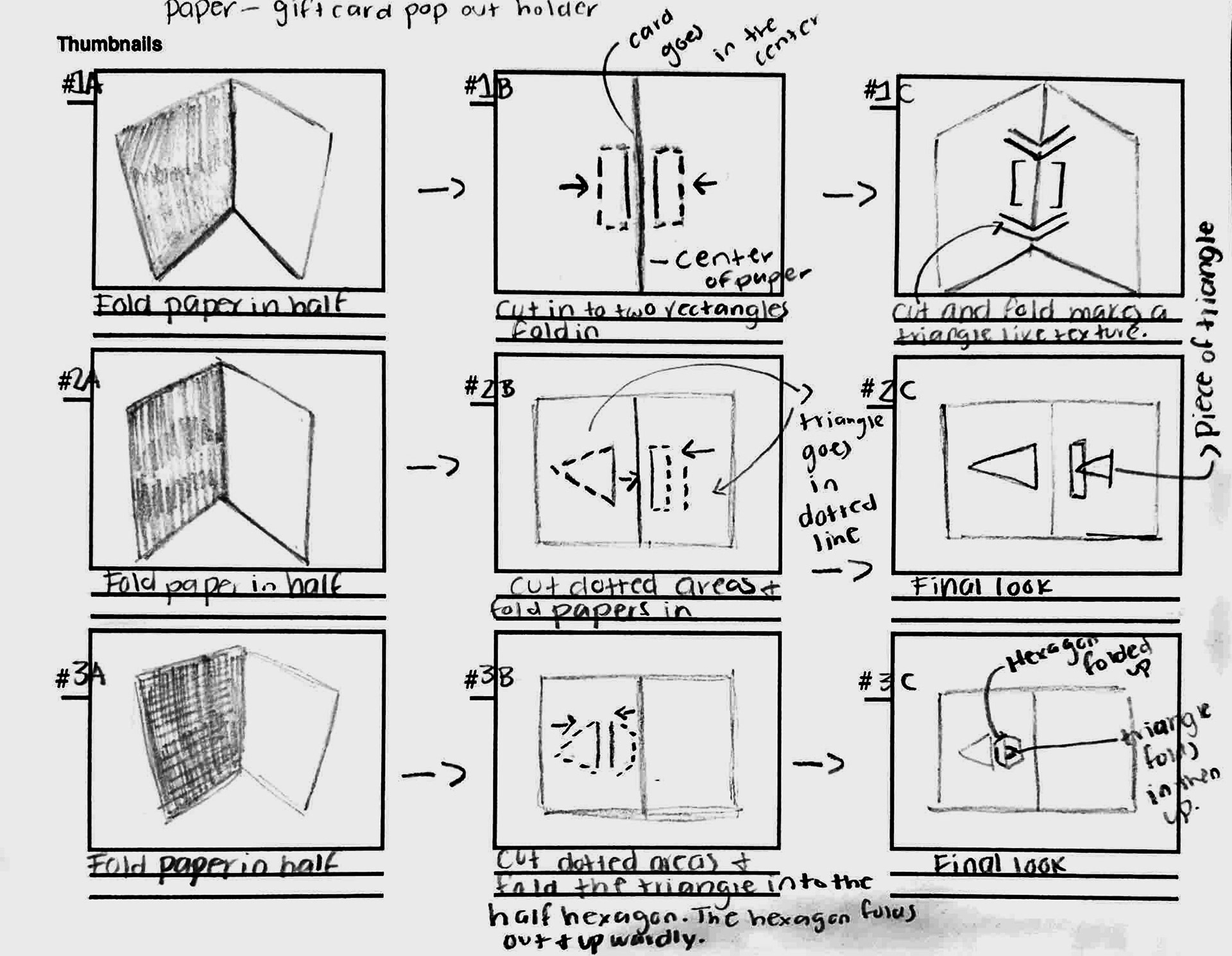
Before constructing the final prototype, I explored several structural possibilities through hand-drawn sketches. These drawings helped me visualize how cuts, folds, and internal supports could transform a flat sheet of paper into a dimensional object. Each variation tested a different pop-up mechanism and placement for the gift card, allowing me to evaluate how the structure would behave when opened. Sketches 1A–1C represent the concept that was ultimately selected for development, as it provided the most stable and visually balanced pop-up structure. The remaining sketches document alternative ideas explored during the ideation stage and illustrate the iterative nature of the design process.
Comparing Prototypes
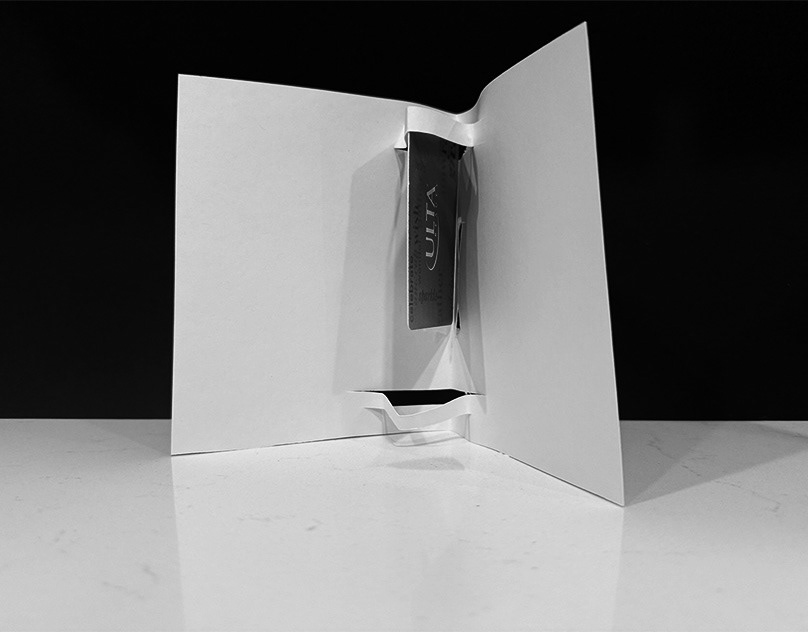
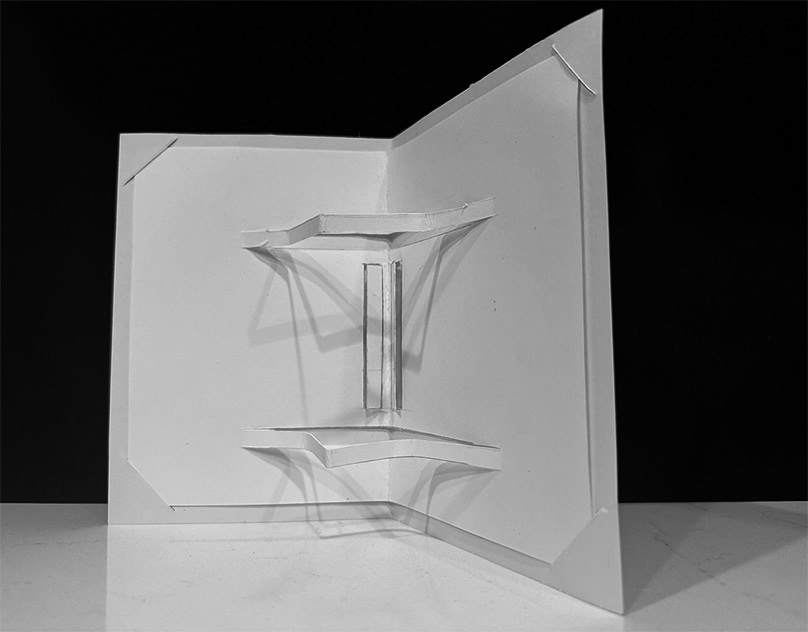
The image on the left shows the earlier prototype, where the gift card did not properly fit within the pop-up structure. The image on the right displays the refined final prototype, where the dimensions were adjusted so the card fits securely, and thicker paper was used to improve the overall stability and durability of the design.
Final Pop-Up Gift Card Prototype
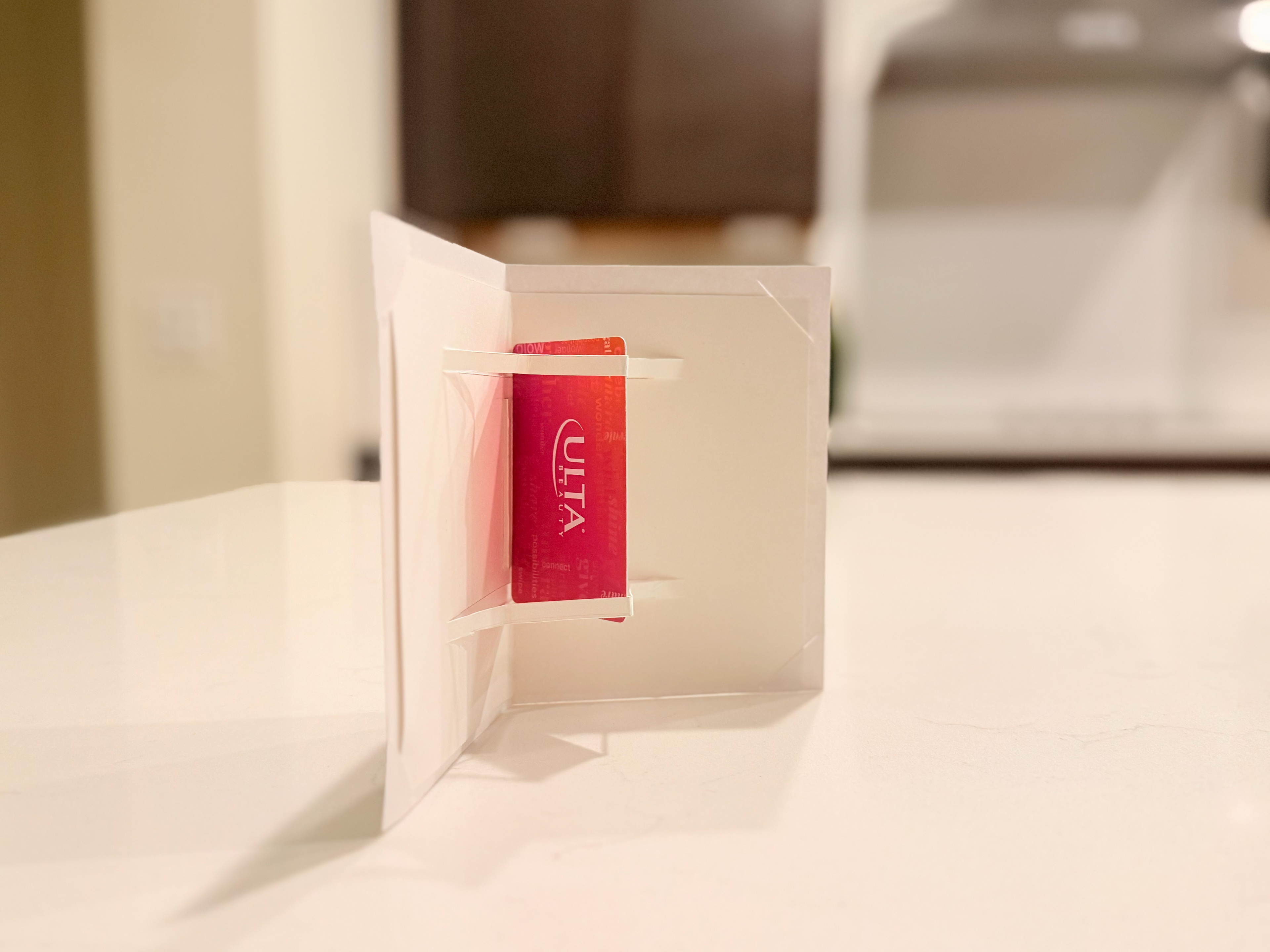
The final prototype uses a simplified folded structure that allows the gift card to rise naturally into view as the holder opens. By refining the folds and reducing excess structural elements, the design achieves a cleaner interaction while maintaining stability and support entirely through paper manipulation.
Mapping the Structure: The Architectural Paper Prototype
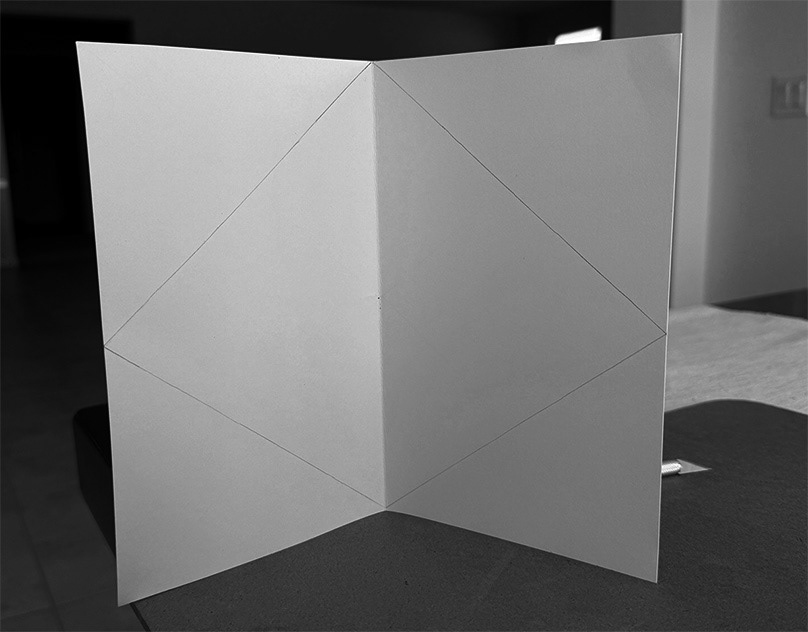
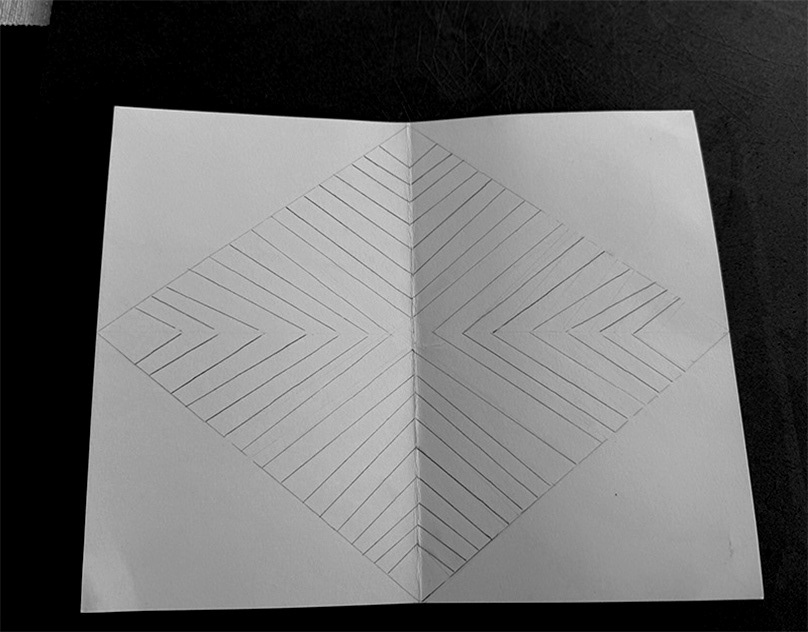
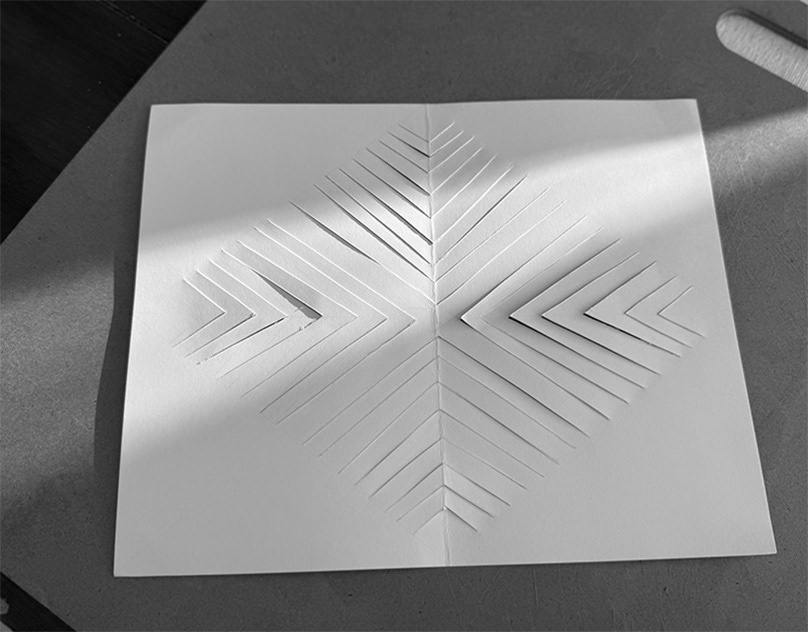
Reaching the final cutting pattern required several trials to understand how the paper would lift and fold from the surface. Pencil guides were used to establish a diamond-shaped framework and intersecting center lines that determined the cutting paths. Once the layout felt balanced, the cuts were made along these guides, allowing the sheet to remain intact while forming layered dimensional planes.
Final Architectural Paper Prototype
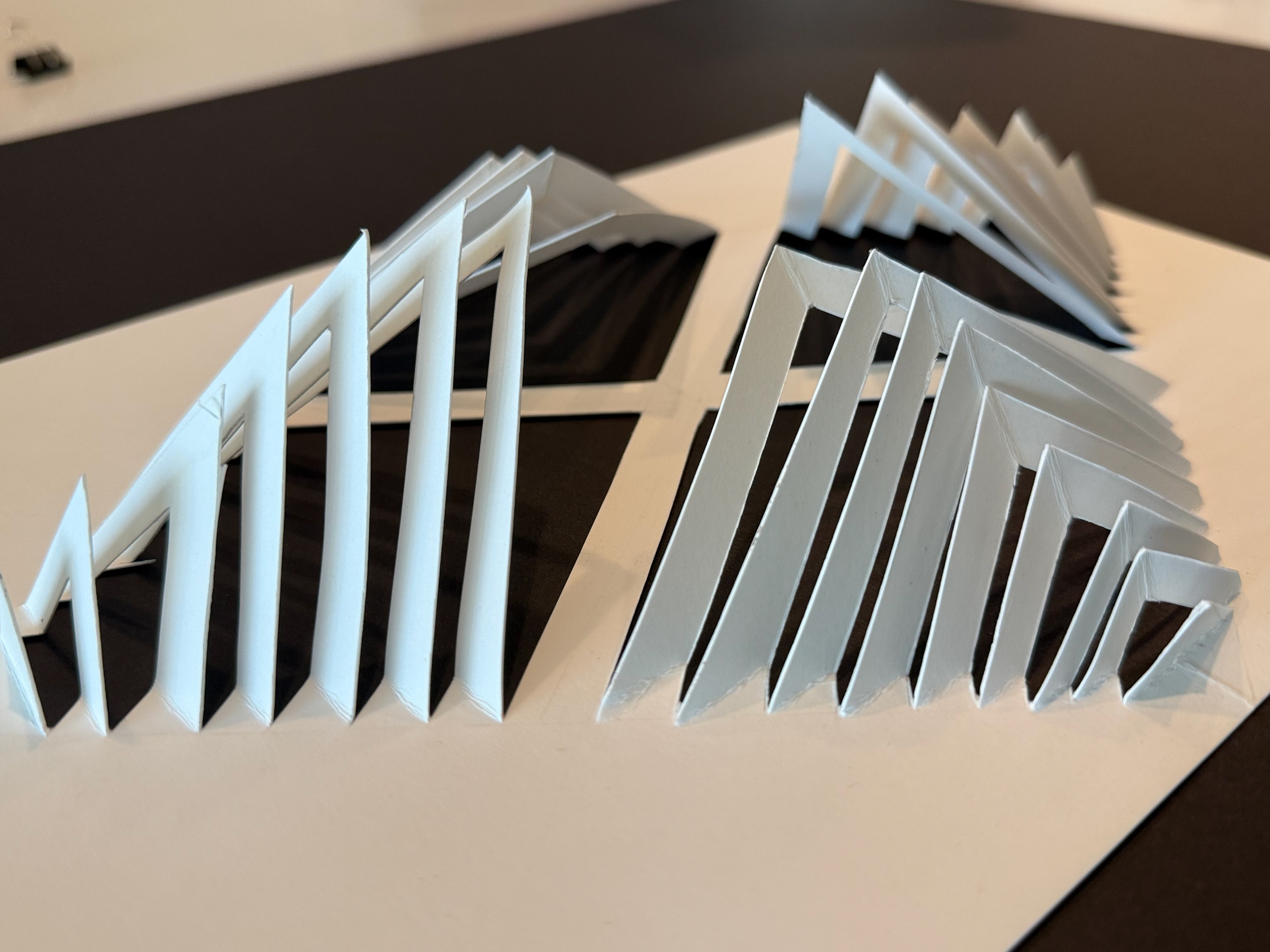
The final structure emerges from a single sheet of paper through a series of controlled cuts and folds that lift the surface into repeated triangular forms. The layered planes create a rhythmic architectural composition where symmetry, spacing, and height variations produce depth and shadow. By keeping all cuts connected to the sheet, the design transforms the flat surface into a dimensional structure that resembles exposed architectural beams and structural frames.